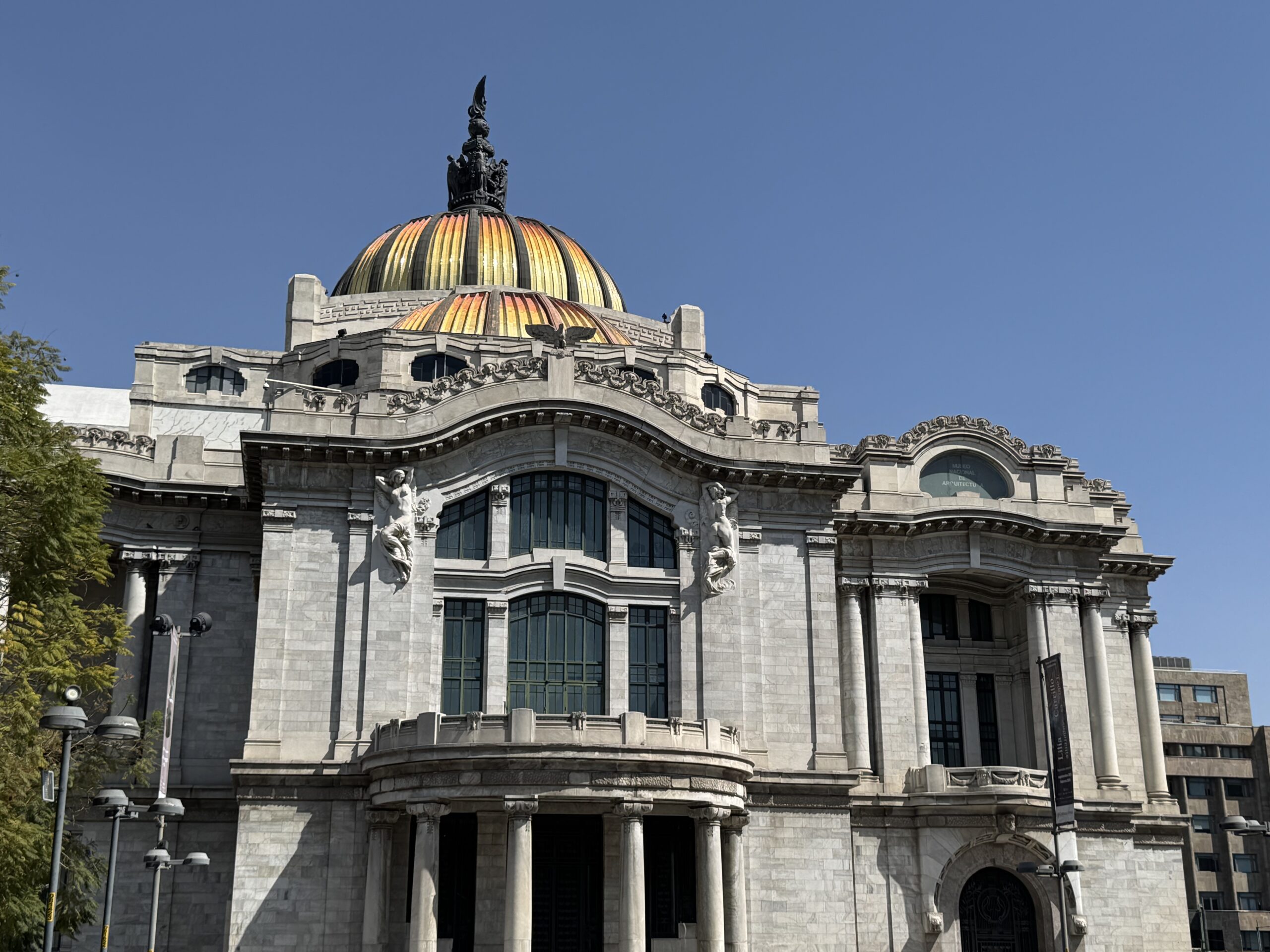
Last week, I spent my Washington break in Mexico City. Being back in Mexico brought a lot of nostalgia from my time in Oaxaca, especially when walking through the neighborhoods of Roma Norte and Condesa. The similarities between these two neighborhoods and the historic center of Oaxaca were on every block. The colonial architecture mixed with minimalist cafe shops, the amount of greenery and plants, and the various languages I could overhear.
This stood out to me the most because it shows how visible the signs of gentrification are in neighborhoods like Roma Norte and Condesa, which are known to be hotspots for tourists and foreign workers moving to the city. It got me thinking how easily I could spend 300 to 500 pesos on anything and not have to think twice about it, but in terms of someone living and working in Mexico, that amount is the equivalent of a day’s worth of work.
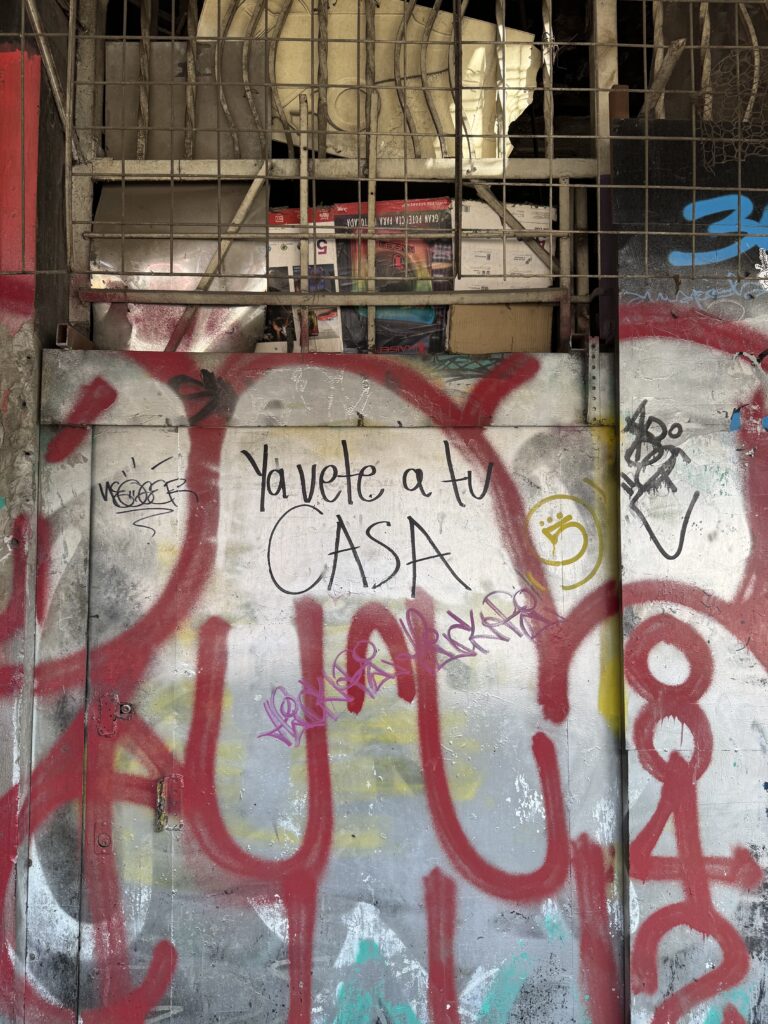
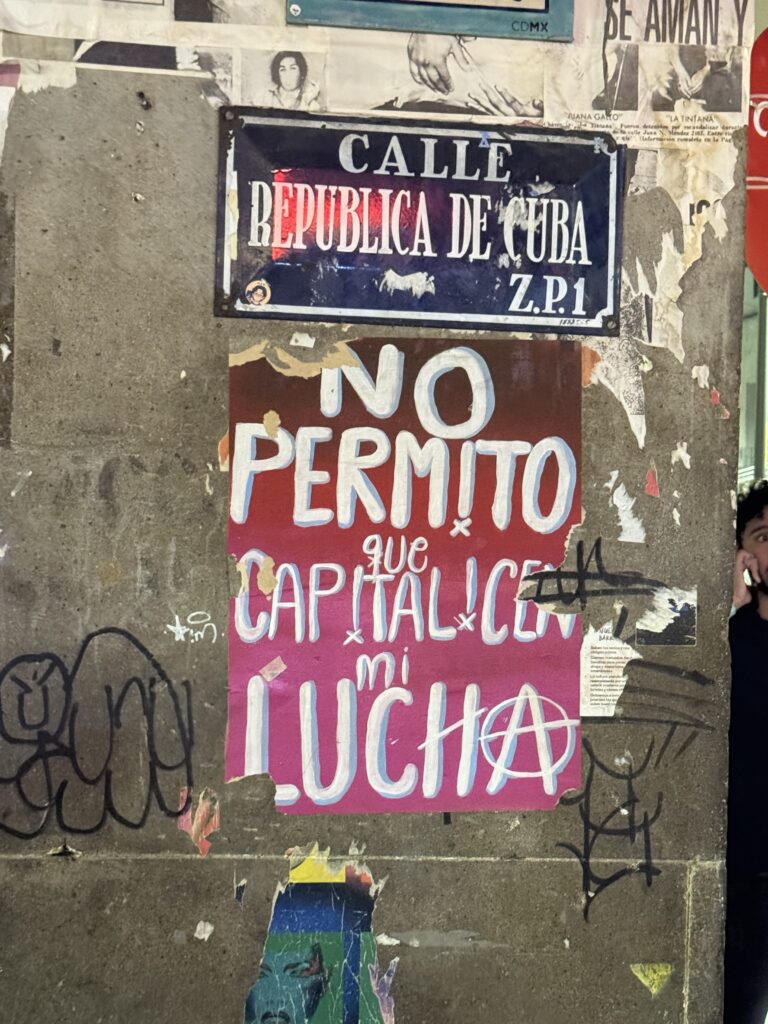
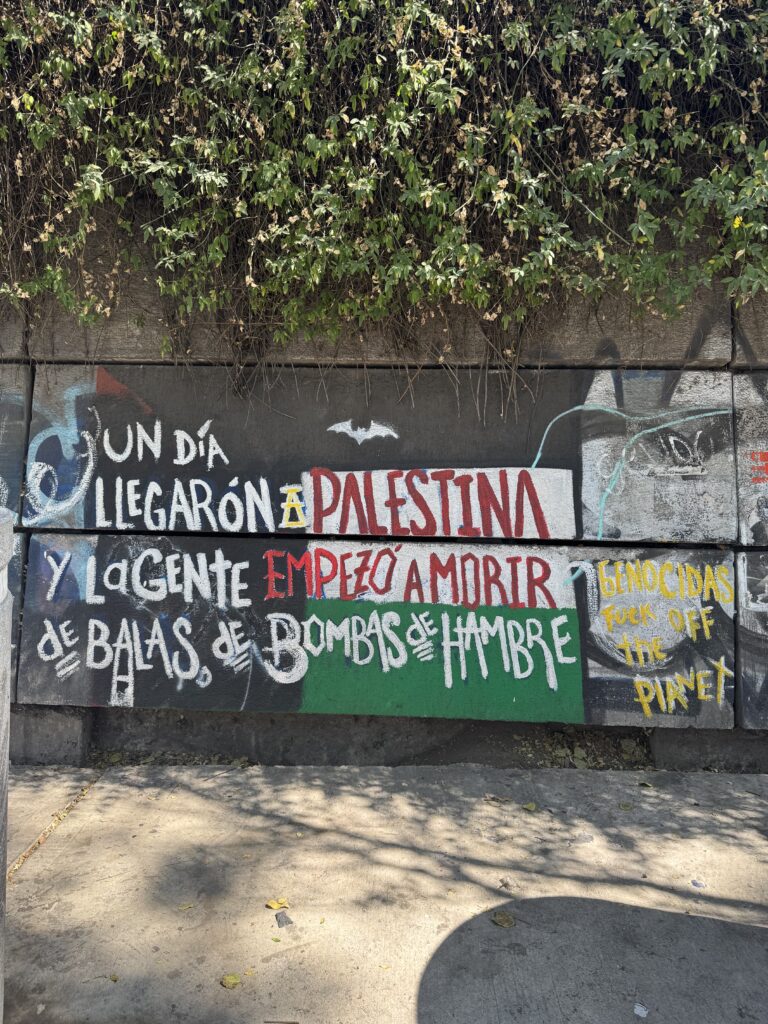
Walking through these neighborhoods, it is also noticeable that people are standing up to the gentrification. It may not be in an abrupt protest, but in subtle forms of political statements like graffiti. There are political statements graffiti-ed across walls discussing rising rents and foreigners moving in. This was something I also witnessed across the historic center of Oaxaca; graffiti across the city was targeting the rising costs of living, the influx of foreigners, and gentrification.
During the time I was in Mexico, headlines were also circulating on social media about the death of a cartel leader. References to chaos and war zones were quickly added to news coverage, and social media only served to amplify the noise. On the ground, in Mexico, life continued. People went to work. People went shopping. At least for people in the city, nothing about daily life resembled the portrayal seen across social media.
But I also recognize that being in Mexico City, in many ways, is a privilege. certain neighborhoods are shielded from the harsh realities that affect poorer zones and other regions of the country. There is a sense of normalcy and safety, especially in the touristy parts of the city. That privilege matters.
At the same time, the news coverage was happening at the time highlights the lack of cultural competence and the monolithic view “Western societies” have on the rest of the world. A country as vast and diverse as Mexico cannot be reduced to a single incident or headline. One event does not define the entirety of Mexico any more than a single act of violence does not define the entirety of the United States. The danger in doing so lies in flattening the complexities of the historical context in which Mexico’s backyard was affected by colonial powers.
I am not saying I know it all, or that traveling makes me an expert, but if you take the time to slow down and actually react appropriately, it does help challenge assumptions.
To see more from my trip to Mexico City, check out my gallery, where I have uploaded pictures captured throughout the week.
